Aylmer Wildlife Management Area
What’s New at AWMA 2026
Key Biodiversity Area
Recognition of the AWMA by Birds Studies Canada as an Important Bird and Biodiversity Area, IBA (ON011) has been updated to the new designation of a Key Biodiversity Area (KBA) by the Wildlife Conservation Society Canada and Birds Studies Canada. The Aylmer Wildlife Management Area has been identified as a globally significant KBA for Tundra Swans specifically.
MOTUS
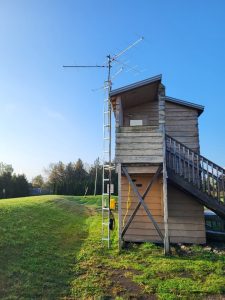
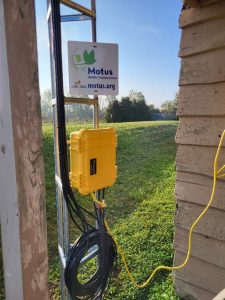
The Motus Wildlife Tracking System (MOTUS) is an international collaborative research network that uses coordinated automated radio telemetry to facilitate research and education on the ecology and conservation of migratory animals. The current MOTUS array is located on Viewing Stand #1. A second array has been installed on the barn at the Fingal WMA by Bird Studies Canada to strengthen the coverage of Elgin Area.
East Cell Reconfiguration
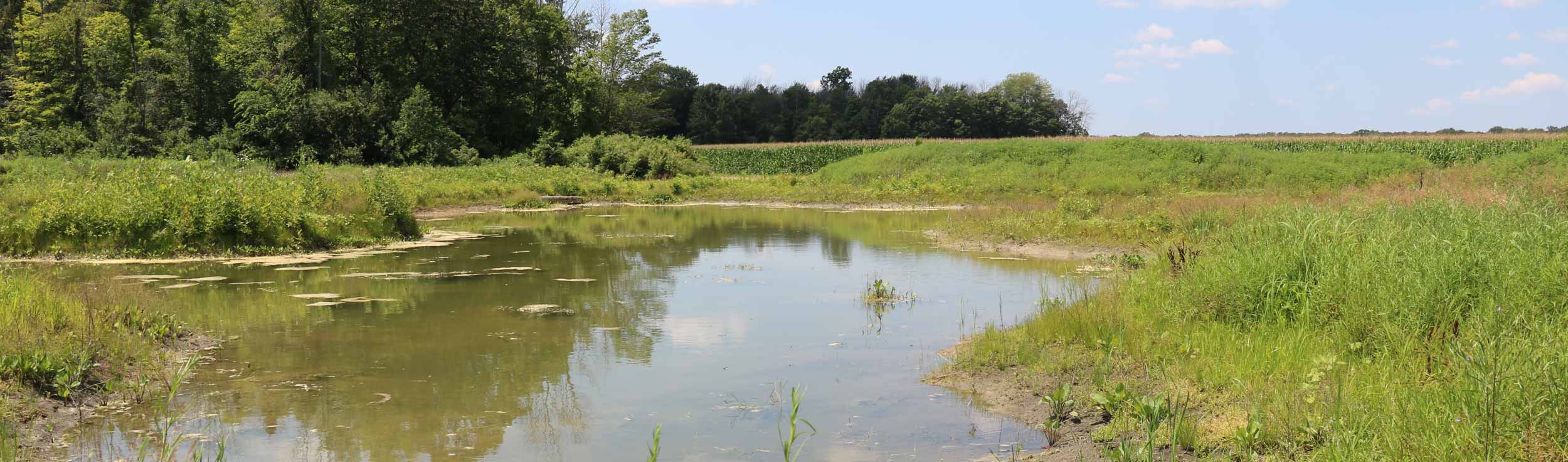
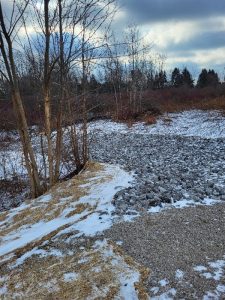
The reconfiguration of the East Cell (Heron Pond) by Ducks Unlimited Canada (DUC) was completed this past November. The old concrete and steel water control structure (55 years old) has been removed and a modern Agrodrain has been installed in its place. This will allow for easier water level regiments. An armoured rip-rap overflow and spillway linking to the Fuller drain has been cut into the original eastern berm. This is a safety measure against a major precipitation event to protect the berm from failure. Once the work to the berm has settled and revegetated, regular water level regiments will resume. This completes the rehabilitation of the Sanctuary cells by DUC
American Chestnut Gene Conservation Colony
The exposure of a sand lens in the clay soils during the digging of a new pond inside the Sanctuary has provided an opportunity to introduce an endangered species to the AWMA. Native American Chestnuts have been planted in the sand lens, to establish a Nut Production Gene Conservation Colony ( NPGCC) under the authority of the Canadian Chestnut Council. These NPGCCs help maintain the current genome diversity of the Canadian population of the American Chestnut as well increase genetic biodiversity for the population in the future. Additional trees are added annually to increase the genetic diversity of the node. In a few years the chestnuts will become an important mast source for wildlife particularly wild turkey and deer.
Osprey Nesting Platform
Our osprey nesting platform continues to attract a single osprey for short visits this past season. With the restoration of the water in the Tundra Swan Pond (west cell), and Heron Pond (east cell) the fish population should bounce back this year to provide the osprey with sufficient food stuffs. Realistically it may take several more seasons to attract ospreys with sufficient food.
Pairing Ponds
The five pairing ponds dug in the autumn of 2018 by the Elgin Stewardship Council in the wildlife sanctuary and the seven pairing ponds dug in 2021 by DUC along the north corridor continue to naturalize with an assortment of aquatic plants, invertebrates, amphibians, and reptiles. A colony of painted turtles is making useage of the installed basking logs and turtle nesting sites as observed last season. Addition aquatic colonizers are anticipated this year and the seeding and planting of assorted native aquatic and emergent species continues.
Water Cells Maintenance
Rehabilitations of the west cell (Tundra Swan Pond) and east cell (Heron Pond) are now complete. The west and east cells will undergo seasonal draw downs and refloods to: provide appropriate shoreline habitat for migrating waterfowl and shore birds, control shoreline vegetation, and reduce the nitrogen and phosphate loading of the cells.
Purple Martin House
Our Purple Martin House has been visited by returning Purple Martins in the spring and during autumn migrations but none have taken up residency as of yet. Additional gourd nests will be added to house pole to attract nesting pairs. We hope to attract a colony this coming spring.
Blue Bird Program
The sixty three Blue Bird boxes along the main roadway, Canada Way and Barn trail have been repaired and cleaned in preparation for another season of nesting of blue birds, tree swallows and Carolina wrens. Refurbishing of older bluebird boxes and relocation to poles is on going.
Duck Baiting, Banding, and Avian Influenza Monitoring
The annual autumn baiting resumed this past season with an addition component to the regular duck banding program performed by Canadian Wildlife Services (CWS). The CWS regularly monitored for any indication of Avian Influenza (AI) in the migrating duck population and/or the site itself by collecting duck blood, stool, water and soil samples. These were all tested for the presence of AI. As of early last November, no indications of AI were detected at AWMA nor were any dead birds observed. The early on set of winter, froze the west cell terminated the baiting, banding and testing programs prematurely. The EESS Environmental Leadership Program Class was in volved in the baiting and banding programs as usual. Monitoring of the site for sick or dead birds is on going with all reports going to CWS. Baiting Permission Application for this coming season is in progress.
Year-Round Bird Feeding
Several bird feeders installed in front of Viewing Stand #3 provide Niger, black oil sunflower, millet, mixed grain and suet to assist the residential and migratory species and to improve birding opportunities for our patrons.
Waterfowl Hunting
Three hunting blinds and parking lots were prepared for the autumn waterfowl hunting season as usual. The soybean crop was harvested by late September providing ample opportunity for waterfowl hunting. Please note that small game, deer and turkey hunting are not permitted at AWMA nor is any target or practice shooting.
Tall Grass Prairie Maintenance
Additional prairie seeding will be performed this spring to infill areas left open by destroyed woody vegetation and thin areas. Preparation for a prescribed burn for this season are well underway with the necessary permissions granted by the OMNR Aviation Forest Fire & Emergency Services. The Low Complexity Prescribed Burn Plan has been prepared by Wildfire Specialists Inc who will be performing the actual burn with the assistance of the CCCA Fire Team and ESC this spring. A burn permit will be obtained from the Municipality of Malahide and all adjacent residents abutting the AWMA block will be notified in writing once a specific burn date is set in April.
Tundra Swan Spring Migration
We anticipate a normal swan migration program this season. All viewing stands will be open this season and the Interpretation Program will operate. Morning feedings of 23 bushels of shell corn will commence in early March. Special thank you to all the local and Elgin-wide volunteers that comprise the Corn Feeding Crew and the Swan Interpreters.
Duck Boxes and Wildfowl Hen Nest Tubes
The six nest tubes have been refurbished and installed for the up coming season. The 30 Wood Duck boxes have been cleaned, repaired and restocked with wood shavings.
Feral Cat Problem
Ground nesting birds: Meadowlark, Bobolink, Savanna Sparrows, etc continue to be decimated by the release of feral cats into the wildlife management area. There has been no nesting of Bobolinks in the meadows for four seasons now. The loss of the Bobwhites that appeared several seasons ago can also be contributed to predation by feral cats. We ask the public to not abandon cats or any domesticated pet in the wildlife area and not to feed or assist these invasive and destructive feral cats.
Donations
All Donations are used to feed the wildlife and maintain the property for passive public recreation and enhance wildlife habitat. Funding for a new viewing stand (#5) is being sought.
Elgin Stewardship Council
The Elgin Stewardship Council is responsible for the care and maintenance of the three Wildlife Management Areas in Elgin: Aylmer, Calton Swamp, and Fingal under an agreement with the MNRF.
AWMA Manager:
Ron Casier Call: 519 318 5279 Email: ronjcasier@gmail.com
Please report vandalism or issues to the manager
Location
- Exit the 401 at interchange 203 (Elgin Rd, South)
- Turn left (go east) off of Elgin Rd. onto College Line
- Turn right (go south) off of College Line onto Hacienda Rd
- The 911 address is 10594 Hacienda Rd.